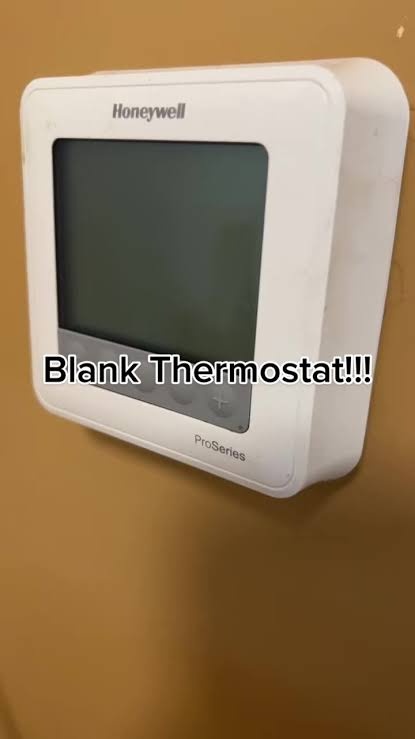
Modern thermostats are designed to make temperature control easier, but some settings can be confusing at first. One of the most commonly misunderstood options is “Hold.” Homeowners may activate it accidentally or wonder why their thermostat stops following its programmed schedule after selecting it.
Understanding this feature can help homeowners manage indoor comfort more effectively while avoiding unnecessary heating or cooling.
When homeowners ask, what does hold mean on a thermostat, they are generally asking about a setting that temporarily or permanently overrides the thermostat's programmed schedule.
A programmed thermostat may automatically change the temperature throughout the day based on preset periods. For example, it might maintain one temperature while the family is away and another after everyone returns home.
When Hold is activated, the thermostat can maintain the temperature selected by the user instead of automatically following the next scheduled temperature change. The exact behavior depends on the thermostat model and the type of hold selected.
Some thermostats provide a temporary hold that lasts until the next scheduled period, while others allow a permanent hold until the user manually cancels it.
The Hold function can be useful when daily routines change. Suppose a household normally leaves for work at 8 a.m., but someone is staying home during the day. Instead of changing the entire programmed schedule, the homeowner can use Hold to maintain a preferred temperature.
It can also be useful during holidays, weekends, unexpected schedule changes, or periods when occupants are home longer than usual.
The advantage is convenience. Rather than reprogramming multiple temperature periods, a temporary adjustment can be made directly from the thermostat.
Not every Hold option works the same way. Depending on the thermostat, users may see terms such as Temporary Hold, Permanent Hold, Hold Until, or similar options.
A temporary hold generally overrides the schedule for a limited period. Once the specified period ends, the thermostat resumes its programmed schedule.
A permanent hold typically continues until someone manually cancels it. If a homeowner forgets that a permanent hold is active, the HVAC system may continue maintaining the selected temperature even when the household's normal schedule would call for a different setting.
This is one reason understanding the thermostat's specific instructions is important.
A Hold setting does not automatically increase energy consumption. The impact depends on the temperature selected and how long the override remains active.
For example, maintaining a cooler indoor temperature during the heating season or a warmer temperature during the cooling season can reduce HVAC runtime. Conversely, selecting a significantly different temperature and leaving it active for an extended period can increase energy use.
The U.S. Department of Energy recommends thermostat settings that reduce heating and cooling demand when people are asleep or away from home. Programmable and smart thermostats can help automate these adjustments.
Therefore, Hold is most useful when it complements the household's actual routine rather than replacing an efficient schedule indefinitely.
Smart thermostats have expanded the role of manual temperature adjustments. Instead of simply following a fixed schedule, newer devices may combine scheduling with occupancy detection, remote control, sensors, and automation.
This means a manual temperature change may interact with other features differently depending on the thermostat.
For example, some smart systems may let users specify how long a manual adjustment should remain active. Others may return to the programmed schedule at a predetermined time.
Before changing advanced settings, homeowners should consult documentation for their specific thermostat. The word “Hold” may appear similar across devices, but its functionality is not necessarily identical.
If a thermostat is no longer following its programmed schedule, check whether Hold is active. The display may show “Hold,” “Permanent Hold,” or another indication depending on the model.
Many thermostats provide a Resume, Cancel, or similar option that allows the programmed schedule to take control again. The exact button or touchscreen option varies by manufacturer and model.
If the thermostat does not resume its schedule after the hold is canceled, review the programming settings. A schedule may have been changed separately from the Hold function.
One common mistake is activating a permanent hold when a temporary adjustment was intended. Another is forgetting that a hold remains active after an unusual schedule change.
Homeowners may also assume that Hold turns the HVAC system off. It does not. Instead, it generally changes how the thermostat manages the selected temperature.
Another misunderstanding is assuming that Hold repairs an HVAC problem. If the system cannot reach the selected temperature, the issue could involve airflow, equipment performance, thermostat calibration, insulation, or another HVAC component.
The thermostat market continues moving toward more intelligent and automated temperature management. Modern systems increasingly emphasize remote access, energy monitoring, sensors, learning capabilities, and smart-home integration.
These features are designed to reduce the amount of manual adjustment required from homeowners. Instead of constantly changing the temperature, users can establish preferences and allow automation to respond to schedules and occupancy.
Even with these advances, understanding basic controls such as Hold remains valuable. Manual overrides can still be useful when real-life schedules do not match automated routines.
A Hold setting is normally something homeowners can manage themselves. However, professional assistance may be appropriate when temperature changes do not produce the expected HVAC response.
If the system runs continuously, does not start, produces unusual sounds, repeatedly loses power, or cannot maintain a comfortable temperature, the problem may extend beyond thermostat programming.
An HVAC professional can evaluate the thermostat, wiring, airflow, electrical components, and heating or cooling equipment to determine the actual cause.
For homeowners wondering what does hold mean on a thermostat, the simplest explanation is that Hold generally overrides the programmed temperature schedule so the thermostat maintains a selected setting for a specified period or until manually canceled.
Used correctly, this feature provides flexibility without requiring homeowners to redesign their entire temperature schedule. The key is knowing whether the thermostat uses a temporary or permanent hold and remembering to resume the programmed schedule when the adjustment is no longer needed.
As smart thermostat technology continues advancing in 2026, manual controls remain an important part of effective home climate management. Understanding them can help homeowners maintain comfort while making smarter decisions about heating and cooling.

This post has been authored and published by one of our premium contributors, who are experts in their fields. They bring high-quality, well-researched content that adds significant value to our platform.











Photography Shots is your source for photography tips, camera guides, editing tutorials, and creative inspiration. Capture moments, tell stories, and improve your photography skills.