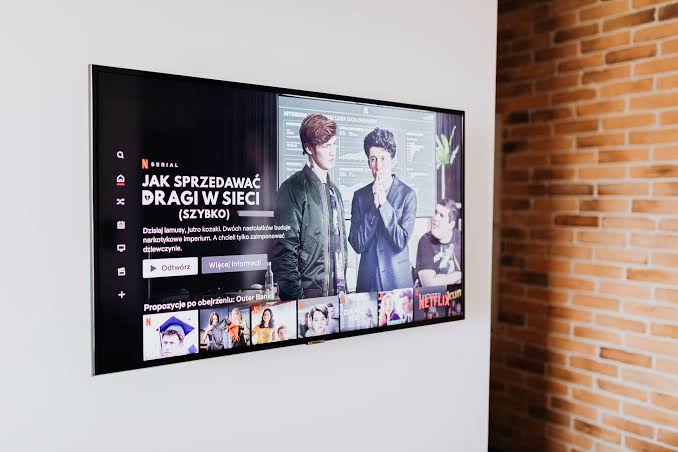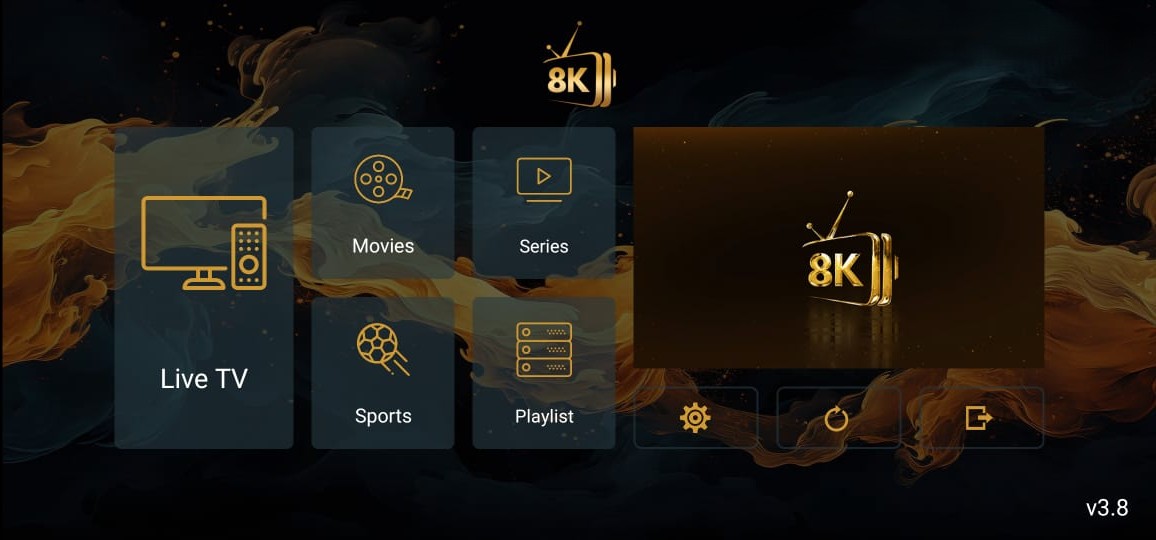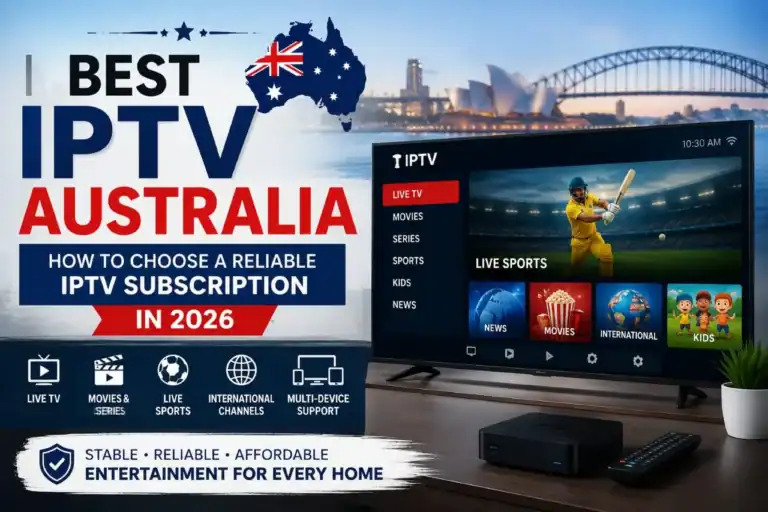
Smart TVs have changed the way Australians enjoy entertainment at home. Instead of using a television only for traditional broadcasts, viewers can now connect their TVs to the internet and use different streaming applications.
This has also made IPTV Australia an option for people who want to watch television through an internet connection. Depending on the provider, IPTV can offer live channels, sports, movies, TV shows, news, and Video on Demand.
For beginners, however, it is important to understand how IPTV works with Smart TVs, what features to look for, and what should be checked before choosing a subscription.
IPTV Australia refers to television content delivered through an internet connection using Internet Protocol technology.
Traditional television can be delivered through terrestrial broadcasts, cable, or satellite. IPTV uses an IP network to deliver available content to compatible devices.
Depending on the provider and its content rights, an IPTV service may include:
The exact channels and features depend on the individual provider.
An IPTV subscription Australia gives viewers access to selected television content for a specific subscription period.
When using IPTV on a Smart TV, we should check whether the subscription supports our television's operating system and the application recommended by the provider.
Important factors include:
A good subscription should work smoothly with our Smart TV and provide the content we actually want to watch.
IPTV uses an internet connection to deliver television content to the TV.
A typical setup involves:
The exact setup can vary depending on the IPTV provider, application, and Smart TV platform.
Not every Smart TV supports every IPTV application.
Depending on the provider, IPTV may work with televisions using platforms such as:
Support can change between providers and applications, so we should always check compatibility before purchasing a subscription.
One of the biggest advantages is convenience.
A Smart TV can provide a central place for entertainment without necessarily requiring a separate computer.
Depending on the service, users can access:
This can make the television a more complete entertainment center.
Picture quality is an important consideration.
Depending on the provider and content source, IPTV may support:
However, a Smart TV being capable of 4K does not mean every IPTV channel will stream in 4K.
Quality depends on the original content, provider, application, internet connection, and TV capabilities.
A stable internet connection is essential for smooth IPTV playback.
As a general guide:
These are general estimates. Actual requirements can vary depending on compression, service quality, network conditions, and the number of devices using the connection.
If several people are using the internet at the same time, additional bandwidth may be useful.
Both Wi-Fi and Ethernet can be used, depending on the Smart TV and home network.
Wi-Fi is convenient because there are no cables, but the signal can be affected by distance, walls, and network congestion.
An Ethernet connection can provide a more direct and stable connection when the TV is located near the router.
For households experiencing frequent buffering, improving the home network may help.
The application is an important part of the IPTV experience.
A good IPTV application should make it easy to:
Different IPTV providers may recommend different applications, so we should follow the provider's instructions and use reputable software.
An Electronic Program Guide (EPG) displays television schedules and program information.
For Smart TV users, an EPG can make IPTV much easier to navigate.
It can show:
Instead of checking channels one by one, users can browse the schedule from one screen.
Many IPTV services also offer Video on Demand (VOD).
VOD allows viewers to select available movies and TV programs from a library.
Depending on the provider, VOD may include:
The size and selection of the library depend on the provider and its content rights.
Smart TVs are often the main entertainment screen in a family home.
IPTV can potentially provide different types of content for different family members, including children's programs, sports, movies, and news.
Parents should check available content and use parental controls where they are provided by the TV, application, or service.
Some IPTV subscriptions support more than one compatible device, but this does not mean unlimited simultaneous streaming.
Before subscribing, we should check:
This is particularly important for families where several people may want to watch different content.
Before choosing a provider, we should check several important areas.
Confirm that the provider's recommended application works with your TV.
Check that the channels you actually watch are included.
Choose a service that offers suitable video quality for your TV and internet connection.
If movies and TV shows are important, check the available VOD library.
A good EPG can make a large channel list easier to navigate.
Look for clear support options if you experience setup or account problems.
Choose a provider that is properly authorized to distribute the content it offers.
New users may occasionally experience technical problems.
Common issues include:
Possible causes include an unstable internet connection, application problems, device limitations, or provider-side issues.
Restarting the application, checking the network, updating the TV, and following the provider's troubleshooting instructions can sometimes resolve basic problems.
Several simple steps can help improve the viewing experience.
Keep the Smart TV software and IPTV application updated. Make sure the TV has a stable internet connection and avoid placing the router where the signal is blocked.
If Wi-Fi performance is poor, consider improving the home network or using Ethernet where practical.
It is also important to make sure the Smart TV has enough available system resources and that unnecessary applications are not causing performance issues.
The legality of IPTV does not depend on whether it is watched on a Smart TV.
IPTV is a technology for delivering content over an IP network. The important issue is whether the specific provider has the appropriate rights to distribute the content it offers.
Users should choose legitimate providers that are transparent about their services and content licensing.
Users should also think about basic account and device security.
We should:
These simple habits can help protect our devices and accounts.
Smart TVs are likely to become even more important as home entertainment continues moving toward internet-based services.
Future IPTV experiences may include:
As television technology develops, Smart TVs can become an even more central part of connected home entertainment.
Before subscribing, new users should check:
Is my Smart TV supported?
Is the recommended IPTV application compatible?
Does the service offer the channels I want?
Is the streaming quality suitable?
Does it include an EPG?
Is VOD available?
Is my internet connection reliable?
Are multiple devices supported if needed?
Is customer support available?
Is the content properly licensed?
This simple checklist can help prevent common problems.
IPTV Australia on Smart TVs provides a modern way to access television content through an internet connection. Depending on the provider, users can enjoy live TV, sports, movies, TV shows, international channels, and VOD on a compatible Smart TV.
An IPTV subscription Australia should be selected carefully. Smart TV compatibility, internet speed, streaming quality, EPG, VOD, device limits, customer support, and content licensing all matter.
For the best experience, we should choose a reliable and properly authorized provider, use a stable internet connection, and make sure the IPTV application works correctly with our Smart TV.

This post has been authored and published by one of our premium contributors, who are experts in their fields. They bring high-quality, well-researched content that adds significant value to our platform.











Photography Shots is your source for photography tips, camera guides, editing tutorials, and creative inspiration. Capture moments, tell stories, and improve your photography skills.