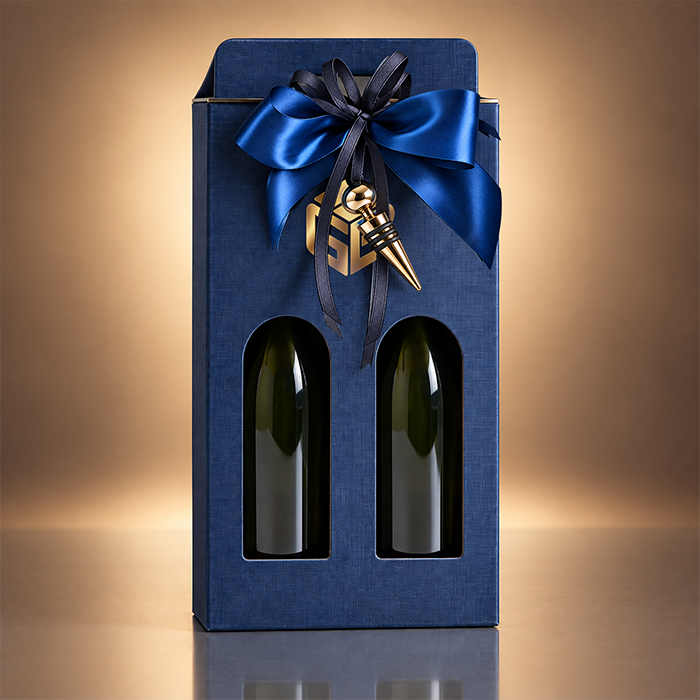
A bottle of wine can mark a celebration, express appreciation, or accompany a special occasion. Its packaging should reflect that purpose while keeping the presentation easy to handle. Custom wine gift boxes bring the bottle, branding, and personal message together in one considered arrangement.
The starting point is balance. The box should suit the bottle, provide an appropriate structure, and leave room for the details that make the gift personal. Decorative elements work best when they complement the contents rather than overwhelm them.
Before choosing a box style, establish what will go inside and who will receive it. A personal gift, a corporate thank-you, and a seasonal collection may call for different artwork and messages.
Measure the actual bottle rather than designing around a general size description. Include its full height, widest point, closure, and any additional wrapping.
If the gift includes several bottles or accessories, list every component before planning the layout.
A useful design brief should cover:
The number and dimensions of the bottles
Any additional items included
The occasion and intended recipient
Branding or personalization requirements
The packing and storage process
Whether the gift will be handed over or delivered
These details help establish a clear direction before artwork begins.
A single-bottle gift box needs a different arrangement from a package containing two or more bottles. Choose the structure around the complete contents and how the recipient will open it.
A separate lid-and-base format, a hinged design, or another proposed construction should be reviewed for practical handling. Check where the user will grip the package and how comfortably the bottle can be removed.
If a handle is included, assess it as part of the fully packed box. Do not approve it based on appearance alone.
Each component should have a defined purpose, whether it supports access, separates items, or contributes to the presentation.
Confirm whether quoted dimensions refer to the inside or outside of the finished box. Account for any insert, divider, lining, or protective material.
The bottle should sit in its intended position without forcing the closure or pressing awkwardly against the panels. Leave enough access for the recipient to lift it naturally.
For multiple bottles, review how each one is positioned and separated. Check the arrangement with the actual products rather than substitutes of a similar size.
A physical sample provides an opportunity to identify fit issues before committing to a larger order.
Decide what the recipient should see first when the box opens. The bottle label, a personal note, or a neatly arranged collection can form the focus.
An insert should support that arrangement without hiding important details or making removal difficult. Avoid filling available space with accessories that have no clear connection to the gift.
If the package contains a bottle opener, glasses, or another item, give each component a defined position. Review the presentation after individual pieces have been removed as well as when the box is full.
The interior should feel organized throughout the opening experience.
A recipient’s name, a short dedication, or a message of appreciation can make the gift feel more individual.
For business gifting, keep the tone appropriate to the relationship. A sincere thank-you may suit the occasion better than a lengthy promotional message.
Decide whether personalization belongs on the lid, an interior panel, a sleeve, or a separate card. A removable element may be useful when the same base box serves several occasions.
Proof personalized details separately. Names, company information, dates, and messages should all be checked before production.
Custom wine gift boxes offer space for a logo, but the branding does not need to dominate every surface.
Choose a clear focal point and leave enough space around it. Keep small lettering away from folds, seams, and edges.
Use colors and typography that connect with the business or event identity. If several gift versions share one design, establish which elements remain consistent and which identify the different contents.
Review the artwork at its actual size and on an assembled sample. The relationship between the lid, side panels, and interior should feel deliberate.
Ask the supplier to specify the complete construction, including the box material, outer covering, lining, inserts, and closure components.
Choose finishes according to the intended design rather than adding several treatments simply to make the package appear elaborate. A textured covering, a limited metallic accent, or a subtle raised mark may provide enough distinction.
Request samples to review appearance and handling. Check edges, corners, surface marks, and the opening action under ordinary conditions.
Keep environmental descriptions specific and supported by information about the finished package. A natural appearance alone should not determine how it is described.
A decorative gift box should not automatically be treated as a complete shipping solution. Review the full packed arrangement for the intended delivery method.
Determine whether an outer carton, additional cushioning, or another protective component is needed. Include the actual bottles and all accompanying items in the assessment.
Confirm any applicable alcohol-delivery requirements with the relevant carrier or qualified adviser before dispatch. Do not assume that packaging approval also resolves delivery restrictions.
For gifts handed over in person, review carrying and handling as carefully as the opening experience.
Run a trial with the people responsible for preparing the gifts. Check how the bottles are placed, how inserts are fitted, and how personalized cards are matched to recipients.
Look for steps that require repeated adjustment or make inspection difficult. Clearly identify different gift versions so similar-looking packages are not confused.
Review the completed box for alignment, closure, accessibility, and presentation. Record the approved packing sequence and keep a reference sample where practical.
A repeatable process helps the final packages match the original design intent.
Compare quotations using matching specifications. Dimensions, construction, printing, inserts, personalization, and delivery terms should be clear before prices are evaluated.
Choose quantities that reflect realistic demand. Consider whether dates, event names, or seasonal artwork could limit the use of remaining stock.
Before approval, check the physical sample alongside the final artwork. Confirm the bottle fit, message, logo placement, spelling, and included components.

This post has been authored and published by one of our premium contributors, who are experts in their fields. They bring high-quality, well-researched content that adds significant value to our platform.



Photography Shots is your source for photography tips, camera guides, editing tutorials, and creative inspiration. Capture moments, tell stories, and improve your photography skills.
